But aren’t we all a little bit demand avoidant?
This is a question I’m asked occasionally when I’m speaking about or delivering training on Pathological Demand Avoidance (PDA).
The answer is “Yes – we are!”
We will all naturally avoid things we find:
Boring
Frightening
Painful
Overwhelming
Uncomfortable etc
I can be very demand avoidant at times. I have ADHD, so I will procrastinate and avoid things that I don’t find stimulating such as:
Report writing
Accounting
Admin
Housework
NICE, (The National Institute for Health and Care Excellence) lists demand avoidance as a possible feature of autism. Within a PDA profile of autism often demands are avoided for no apparent or “rational” reason.
I am extremely proud to work with two multi-disciplinary assessment teams, work that I find very interesting, but also work that comes with a real responsibility to get absolutely right. Which is why, when completing an assessment for PDA we don’t just look at the avoidance of demands.
We look at how demands are avoided.
Why demands are avoided.
The type of demands that are avoided.
PDA is often described as a type of autism characterised by “an anxiety driven need to be in control.” But what is equally, if not more important, to an individual with PDA than the need for control is the need for autonomy. PDA is now often thought of as, a “Pervasive Drive for Autonomy” (Tomlin Wilding) or a “Persistent Drive for Autonomy” (Dr Wenn Lawson) which I actually prefer to “Pathological Demand Avoidance.”
PDAers are not avoiding demands because they are being willingly oppositional, “naughty,” defiant or difficult. PDAers are unable to comply with demands because they are a threat to their autonomy, and this threat causes an unavoidable and overwhelming anxiety response such as fight, flight, freeze, fawn etc.
Often demands are not refused or rejected obviously, rather they are avoided subtlety, and cleverly using distraction, excuses, delaying techniques, flattery, creativity and charm.
It’s essential to remember that it is not that the individual with PDA doesn’t WANT to comply demands, the fact is that they CAN’T comply with them, and that is a very important difference.
A PDAer may genuinely want to do something, but then as soon as someone acknowledges, expects or encourages their desire to do it, then “Bam!” the autonomy that the PDAer needs is removed and replaced with overwhelming anxiety which means the demand has to be rejected so that autonomy is retained.
In an excellent video made by the PDA Society, “Demand Avoidance of the PDA Kind,” https://www.youtube.com/watch?v=CCsfKxyuH1I&t=150s there is a quote from a child who says:
“When somebody tells me to do something, my brain says, “no” so I think up different excuses why I can’t do it, it’s really hard sometimes. I don’t want people to be disappointed with me.”
Think about that for a second………this is a child who puts considerable thought an energy into the feelings of others, not a child who doesn’t care about your feelings or response to the fact that they cannot cope with or comply with the demands that are being placed upon them.
But, it’s not just external expectations and demands which cause anxiety and demand avoidance for an individual with PDA. Internal expectations and demands also remove the feeling of autonomy and control that a PDAer needs. The result? PDAers will avoid things they WANT to do, as well as things they don’t. Imagine how frustrating, upsetting and conflicting this must be for them.
When parenting or supporting an individual with PDA, we must always remember their need for autonomy and the anxiety that is caused when this is taken away, threatened to be removed, or perceived to be taken away.
PDAers will do everything that they can to protect their autonomy, which is why the traditional approaches and strategies that can work so successfully for non-PDA autistic individuals which are routed in routine, structure and predictability, do not work, and can actually be counter-productive for an individual with a PDA profile.
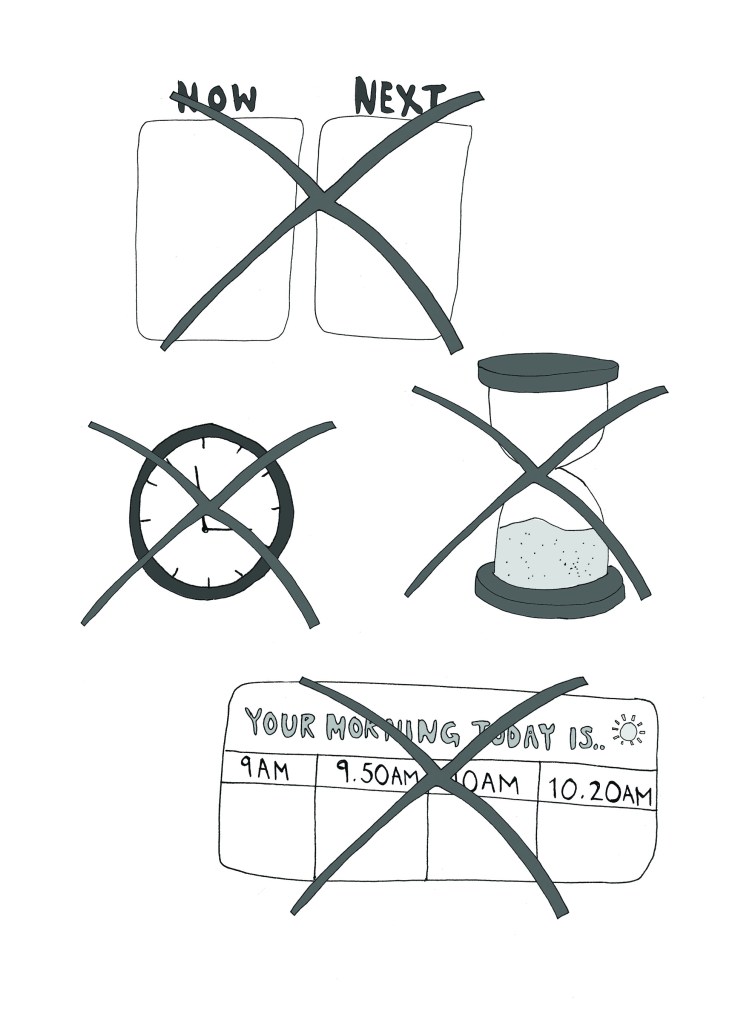
Individuals with PDA don’t need “strategies”, as well as autonomy they need:
- Connection
- Trust
- Safety
- Choices
- Flexibility
- Meaning
- Understanding
- Empathy
- Validation
- Novelty
- Authenticity
And, when given the above, you will see all the amazing characteristics of an individual with PDA, and you will see them thrive!
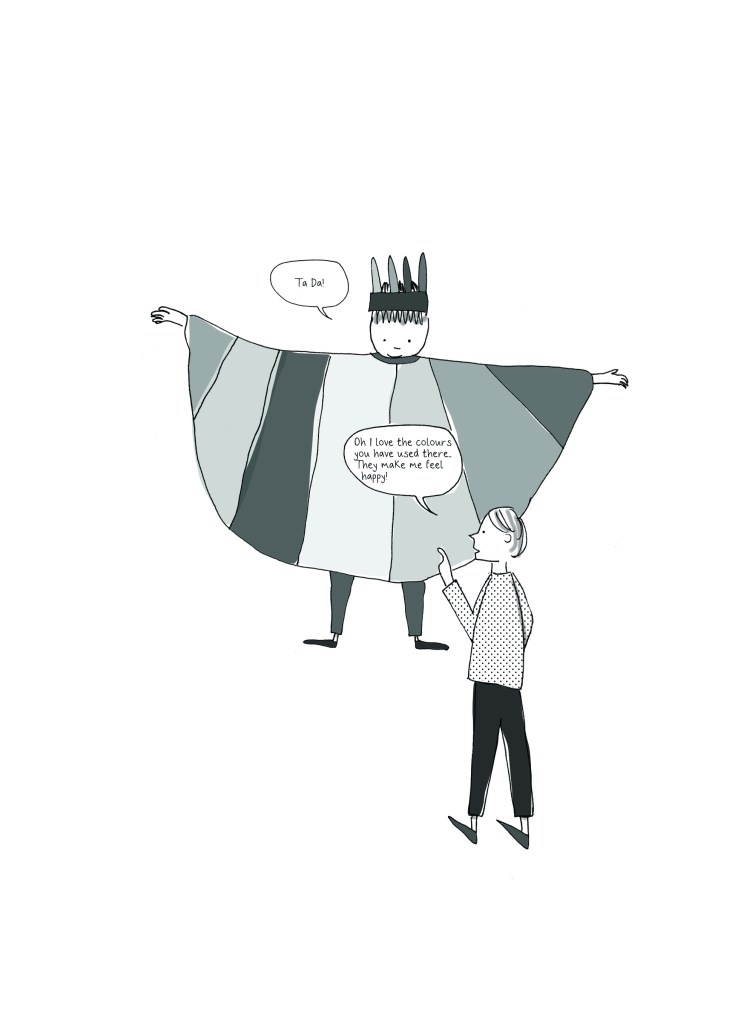
Images by Eliza Fricker, taken from the book, “The Educator’s Experience of Pathological Demand Avoidance” published by Jessica Kingsley Publishing.
For more information on assessments with Positive Assessments Support and Training (PAST) visit:
https://p-ast.co.uk/assessments
For more information about PDA visit:
 The Neurodivergent Educator